About Qryptic

Unlocking privacy in AI.

Qryptic Inc. is a privately held data-security company in Windsor, Ontario. We make it possible to use sensitive data without exposing it, through AI that runs on encrypted data and hardware that keeps cryptography fast in the post-quantum era.

Our story

The problem

In healthcare, finance, and insurance, privacy is a legal necessity. Yet AI only works on data it can read, so teams decrypt it, and that is where exposure happens.

Masking and de-identification can be reversed. Traditional homomorphic encryption keeps data sealed, but it has been too slow and too memory-hungry for production. Meanwhile, quantum computing threatens the public-key cryptography that protects data in transit.

Our mission

Secure, privacy-preserving AI that is fast, scalable, and ready for today’s data-sensitive world.

We turn peer-reviewed research into products: encrypted inference that runs at real-time speeds, and post-quantum hardware that is compact enough to ship.

Two product lines, one goal.

Keep sensitive data protected while it is used, today and after quantum computers arrive.

Qryptic Encrypted Inference

Deep neural networks, including VGG16 and ResNet20, running directly on homomorphically encrypted images, signals, and records. 41 ms per encrypted heartbeat at 128-bit security, with built-in tamper detection.

Explore encrypted inference

Qryptic Polynomial Multiplier IP

A streaming NTT polynomial multiplier for CRYSTALS-Kyber / ML-KEM. 16 to 128 cycles per multiplication, up to 16.25 million multiplications per second at 260 MHz on a Virtex-7, and zero block RAM. FPGA or ASIC.

Explore the IP
Research roots

Built on published work.

Qryptic grew out of research at the University of Windsor, where it was hosted by the SHIELD cybersecurity centre of excellence.

Our team and collaborators have published nine peer-reviewed IEEE papers since 2021, in IEEE Transactions on VLSI Systems, IEEE Transactions on Circuits and Systems II, MWSCAS, and LASCAS. They cover encrypted AI, post-quantum NTT hardware, side-channel resistance, and finite-field multipliers.

See the research
Recognition

Noticed early.

  • One of Canada’s Top 100 AI startups
    Selected by ALL IN 2025, and exhibited in Montreal in September 2025. Read more
  • NEXT AI 2025 cohort
    Chosen from more than 500 applications. Read more
  • 9 IEEE publications
    Five of them in IEEE Transactions journals. See the list

People

Hardware, cryptography, and AI engineers with a shared record of published research.

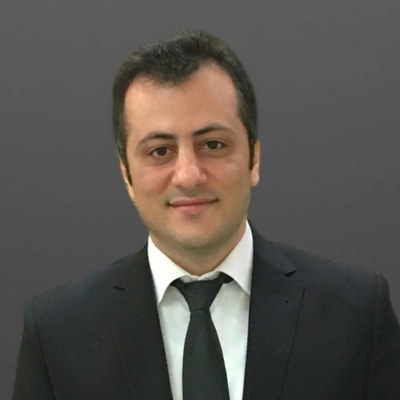
Moslem Heidarpur
Moslem Heidarpur, PhD, P.Eng.
Co-founder and Chief Executive Officer

ASIC and digital hardware engineer with more than a decade of experience designing fast, low-cost architectures, including industry ASIC and SoC design at leading semiconductor and chip-design companies. He earned his PhD at the University of Windsor, where he was also a postdoctoral fellow, and he co-authored all nine Qryptic research papers.
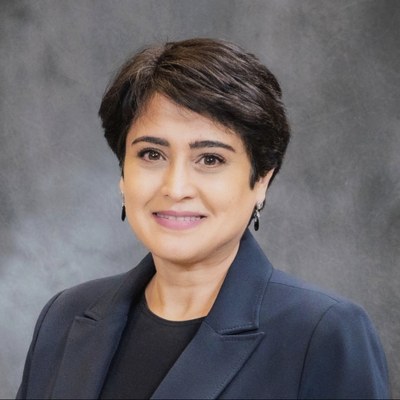
Mitra Mirhassani
Mitra Mirhassani, PhD, P.Eng.
Co-founder and Chief Technology Officer

Professor of Electrical and Computer Engineering at the University of Windsor. Her research covers hardware security, arithmetic optimization, and neuromorphic engineering. She is a Senior Member of the IEEE and has served as an Associate Editor for IEEE Access. She is a co-author of all nine Qryptic research papers.

Alex Leigh
Alex Leigh, PhD
Co-founder and Chief Marketing and Finance Officer

Electrical engineer specializing in analog, digital, and mixed-signal circuit design, with a focus on AI hardware and post-quantum cryptography. He leads Qryptic’s marketing and finance. He earned his PhD at the University of Windsor, one of the youngest graduates of its doctoral program, and was a Technical Research Fellow at the SHIELD cybersecurity centre. He co-holds a patent on energy-efficient neuromorphic hardware.

Hassan Rekabi Bana
Hassan Rekabi Bana
Encrypted AI Research

PhD researcher in hardware implementation at the University of Windsor. He is the lead author of Qryptic’s encrypted-inference research, including sparsity-optimized homomorphic neural networks and integrity-aware encrypted heartbeat analysis. He works on deep neural networks and FPGA hardware design.